Marketing Terms
A/B Testing
Testing two versions of content or ads to see which performs better.
Why it matters: It removes guesswork and improves results over time.
Above-the-Fold
The portion of a webpage visible before scrolling.
Why it matters: First impressions strongly influence bounce and conversion rates.
Ad Creative
The visuals and copy used in an advertisement.
Why it matters: Creative quality directly impacts clicks and conversions.
Ad Fatigue
When audiences stop responding due to overexposure to the same ads.
Why it matters: Fatigue raises costs and reduces performance.
Algorithm
A platform’s system for deciding what content gets shown to users.
Why it matters: Algorithms determine reach and visibility.
Analytics
The collection and analysis of marketing performance data.
Why it matters: Analytics guide smarter decisions and better ROI.
Anchor Text
Clickable text used in a hyperlink.
Why it matters: It helps search engines understand page relevance.
Attribution
How credit is assigned to channels that influence conversions.
Why it matters: Attribution shows what actually drives revenue.
Audience Targeting
Selecting who sees your ads or content.
Why it matters: Better targeting means higher-quality leads and less wasted spend.
Back-End Optimization
Technical improvements not visible to users (speed, structure, tracking setup).
Why it matters: It improves performance, tracking accuracy, and scalability.
Backlink
A link from another website pointing to yours.
Why it matters: Backlinks increase SEO authority and rankings.
Bounce Rate
The percentage of visitors who leave without taking action.
Why it matters: High bounce rates signal weak messaging or poor UX.
Brand Awareness
How familiar people are with your business.
Why it matters: Familiar brands convert more easily.
Brand Equity
The value of your brand based on trust, reputation, and recognition.
Why it matters: Strong brand equity lowers ad costs and increases conversion rates.
Brand Guidelines
Rules for consistent logos, colors, fonts, and tone of voice.
Why it matters: Consistency builds trust and brand recognition.
Brand Voice
The tone and personality used in your messaging.
Why it matters: A consistent voice makes your brand feel trustworthy and memorable.
Buyer Persona
A profile of your ideal customer (needs, goals, behaviors, objections).
Why it matters: Personas improve targeting and conversions.
CAC (Customer Acquisition Cost)
The cost to gain one new customer across marketing and sales.
Why it matters: CAC tells you if growth is profitable or a money leak.
Click-Through Rate (CTR)
The percentage of people who click after seeing content or ads.
Why it matters: CTR measures message and targeting effectiveness.
CLV/LTV (Customer Lifetime Value)
The total revenue a customer generates over the relationship.
Why it matters: LTV determines how much you can spend to acquire customers.
Content Calendar
A schedule for planning and publishing content.
Why it matters: Calendars ensure consistency and reduce last-minute scrambling.
Content Marketing
Creating valuable content to attract and nurture customers.
Why it matters: Content builds trust before asking for the sale.
Conversion Rate (CR)
The percentage of users who complete a desired action.
Why it matters: Conversions determine profitability.
Copywriting
Writing designed to persuade people to take action.
Why it matters: Strong copy increases leads and sales without more traffic.
Cost Per Click (CPC)
The amount paid for each ad click.
Why it matters: Lower CPC means more traffic for the same budget.
Cost Per Lead (CPL)
The cost to generate one lead.
Why it matters: CPL helps you judge lead-gen efficiency.
Cost Per Thousand Impressions (CPM)
The cost to show an ad 1,000 times.
Why it matters: CPM measures the cost of attention.
CRM (Customer Relationship Management)
Software used to track leads, customers, and follow-ups.
Why it matters: CRMs prevent lost leads and missed revenue.
CTA (Call to Action)
A prompt telling people what to do next (call, book, DM, buy).
Why it matters: Without a CTA, attention rarely turns into results.
Customer Journey
The path from awareness → consideration → purchase → retention.
Why it matters: Understanding the journey improves messaging and conversions.
Domain Authority (DA)
A score estimating a website’s ability to rank (comparative metric).
Why it matters: Higher authority usually correlates with stronger ranking potential.
Drip Campaign
Automated email messages sent over time.
Why it matters: Drips nurture leads until they’re ready to buy.
Email Marketing
Sending targeted emails to subscribers or leads.
Why it matters: Email is one of the highest-ROI marketing channels.
Engagement
Interactions like likes, comments, shares, saves, and replies.
Why it matters: Engagement boosts reach and builds trust.
Engagement Rate
Engagement divided by reach or followers (depending on metric used).
Why it matters: It shows content quality better than likes alone.
Evergreen Content
Content that stays relevant long-term.
Why it matters: Evergreen content drives ongoing traffic and leads.
Frequency (Ad Frequency)
How often the same person sees your ad.
Why it matters: High frequency can cause ad fatigue and reduce performance.
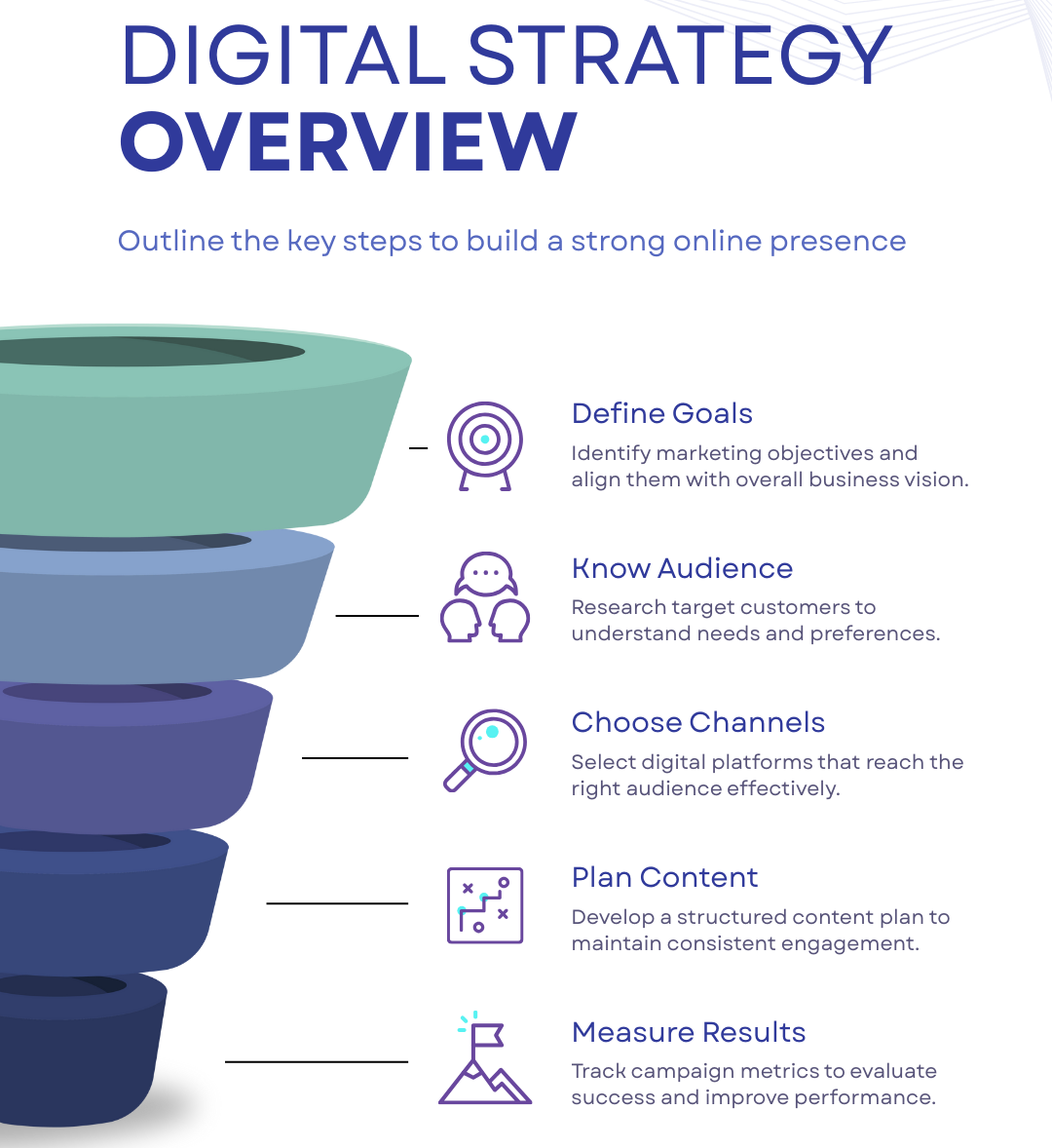
Funnel
The process that moves people from awareness to purchase.
Why it matters: Funnels make marketing predictable instead of random.
GA4 (Google Analytics 4)
Google’s analytics platform for tracking user behavior and conversions.
Why it matters: GA4 helps measure what’s working and where leads come from.
Gated Content
Content accessible only after a form fill (email capture).
Why it matters: Gated content converts traffic into leads.
Google Business Profile (GBP)
A free listing that shows your business in local search and Maps.
Why it matters: GBP drives local calls, directions, and inquiries.
Heatmap
A visual report showing where users click, scroll, or focus on a page.
Why it matters: Heatmaps reveal friction that kills conversions.
Impressions
The number of times content or ads are displayed.
Why it matters: Impressions measure visibility volume.
Keyword
A word or phrase people search for online.
Why it matters: Keywords connect searchers to your content and offers.
Keyword Difficulty
How hard it is to rank for a keyword (competitive estimate).
Why it matters: It affects SEO strategy and timeline expectations.
KPI (Key Performance Indicator)
A metric that tracks progress toward goals.
Why it matters: KPIs keep marketing focused on outcomes.
Landing Page
A focused page designed to convert visitors into leads or buyers.
Why it matters: Landing pages remove distractions and improve conversions.
Lead
A potential customer who shows interest.
Why it matters: Leads are the fuel for sales.
Lead Magnet
A free offer exchanged for contact info (guide, checklist, quote).
Why it matters: It builds your pipeline quickly.
Lookalike Audience
An ad audience modeled after your best customers or leads.
Why it matters: Lookalikes help scale results to similar buyers.
Local SEO
Optimizing online presence to rank for local searches.
Why it matters: Local SEO attracts nearby, high-intent customers.
Market Positioning
How your brand is perceived compared to competitors.
Why it matters: Strong positioning makes choosing you easier.
Marketing Qualified Lead (MQL)
A lead that meets engagement/fit criteria and is ready for nurturing or sales review.
Why it matters: MQLs help separate real opportunities from noise.
Meta Description
A short summary that can appear under a search result title.
Why it matters: Better meta descriptions can increase CTR.
NAP (Name, Address, Phone)
Your business’s core contact info across the web.
Why it matters: Consistent NAP improves local trust and rankings.
Off-Page Optimization
SEO efforts outside your website (links, citations, PR, mentions).
Why it matters: Off-page signals build authority and trust.
On-Page Optimization
Optimizing page content and HTML (titles, headings, internal links).
Why it matters: It helps search engines understand relevance and intent.
Organic Marketing
Unpaid marketing methods like SEO and organic social.
Why it matters: Organic builds long-term visibility and trust.
Paid Media
Traffic acquired through paid advertising (search, social, display).
Why it matters: Paid media drives immediate visibility and leads.
Pay-Per-Click (PPC)
An ad model where you pay when someone clicks.
Why it matters: PPC can generate leads quickly and measurably.
Reach
The number of unique people who see your content.
Why it matters: Reach determines how many potential customers you touch.
Remarketing (Retargeting)
Ads shown to people who previously visited or engaged.
Why it matters: Retargeting converts warmer audiences more efficiently.
Reels / Short-Form Video
Short videos optimized for discovery on social platforms.
Why it matters: Short-form video is one of the fastest ways to reach new people.
Return on Ad Spend (ROAS)
Revenue generated per dollar spent on ads.
Why it matters: ROAS shows if ads are profitable.
Return on Investment (ROI)
Profit returned from marketing efforts relative to cost.
Why it matters: ROI determines whether marketing is worth scaling.
Sales Qualified Lead (SQL)
A lead vetted as ready for direct sales contact.
Why it matters: SQLs improve close rates and reduce wasted follow-up.
Schema Markup
Structured code that helps search engines understand your content.
Why it matters: Schema can improve search appearance and click-throughs.
Search Engine Marketing (SEM)
Paid advertising to appear in search results (often PPC-focused).
Why it matters: SEM captures high-intent buyers instantly.
Search Engine Results Page (SERP)
The page of results shown after a search query.
Why it matters: Your position on the SERP heavily impacts traffic.
Search Intent
The reason behind a search (learn, compare, buy, find local).
Why it matters: Matching intent increases conversions.
SEO (Search Engine Optimization)
Improving visibility in organic search results.
Why it matters: SEO drives consistent, high-intent traffic over time.
Session Duration
How long visitors stay on your website.
Why it matters: Longer sessions often indicate better relevance and UX.
Social Proof
Trust signals like reviews, testimonials, and case studies.
Why it matters: Social proof reduces hesitation and increases conversions.
Top of Funnel (TOF)
Marketing focused on awareness and discovery.
Why it matters: TOF fills your pipeline with new prospects.
UI (User Interface)
The visual layout and design elements users interact with.
Why it matters: Clean UI improves credibility and usability.
UTM Parameters
Tracking tags added to URLs to identify traffic sources in analytics.
Why it matters: UTMs prove which campaigns are driving results.
UX (User Experience)
How users feel navigating and interacting with your website/content.
Why it matters: Better UX increases conversions and reduces drop-off.
Website Conversion Optimization (CRO)
Improving a website to increase leads/sales without more traffic.
Why it matters: CRO raises revenue from the traffic you already have.
White-Hat SEO
SEO practices that follow search engine guidelines.
Why it matters: It protects rankings long-term and avoids penalties.
Zero-Click Searches
Searches where users get answers without clicking any result.
Why it matters: It changes how visibility and SEO success are measured.